






Introduction
Not all power arrives in armour.
Some power prefers polished steel, a sharp bezel, a clean dial and the quiet confidence of symmetry. The Tudor Royal 2026 is such a watch. It does not come roaring from the racetrack like the Black Bay Chrono, nor does it dive into the black pressure of the sea. It belongs to another theatre entirely.
The theatre of taste.
The theatre of daily elegance.
The theatre where a watch must move from morning work to evening glass without changing its voice.
For 2026, Tudor refreshes the Royal collection with new sizes, new colours, revised details and manufacture calibres across the line. The result is a family of watches that feels sharper, more mature and far more important than its gentle name might suggest.
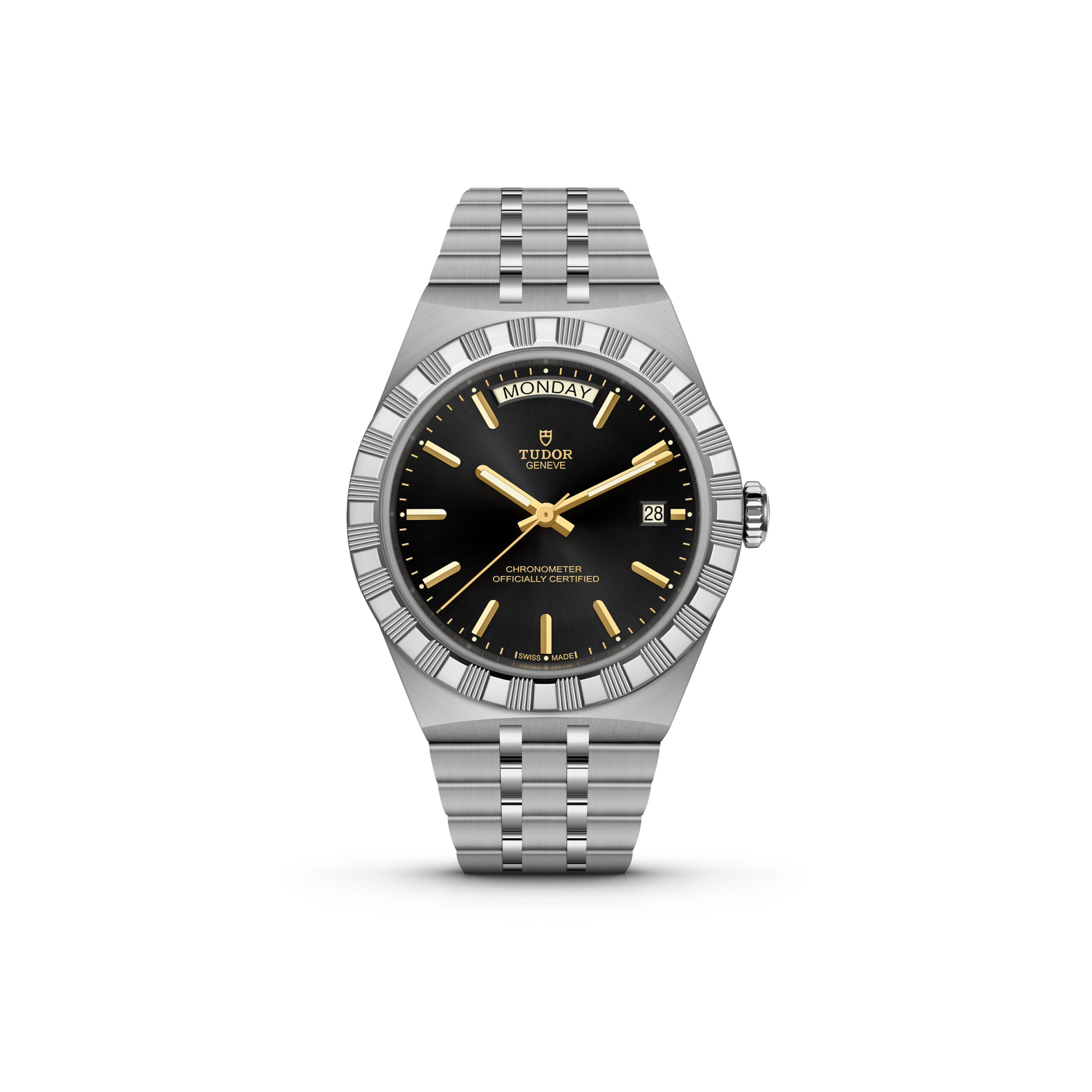
Image courtesy of ©Tudor Watches - 2026
Royal, after all, is not only a word of crowns. It is a word of bearing.

Yours truly...
A Royal for Every Wrist
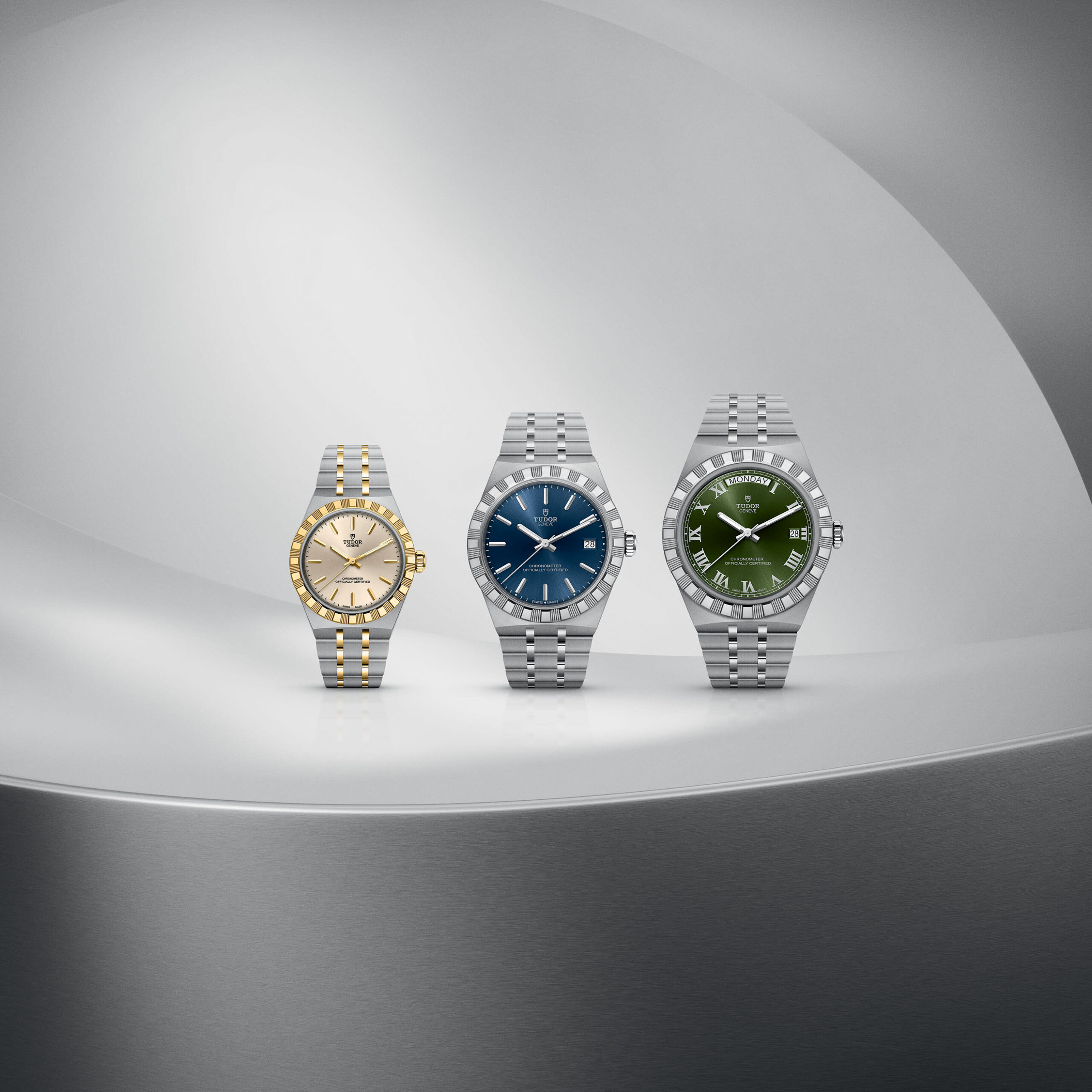
The updated Tudor Royal arrives in three case sizes: 30 mm, 36 mm and 40 mm. This immediately gives the collection a wider reach than many sport-chic watches, which too often pretend that one case size can serve all wrists, all tastes and all lives.
It cannot.
A watch must know the body it serves.
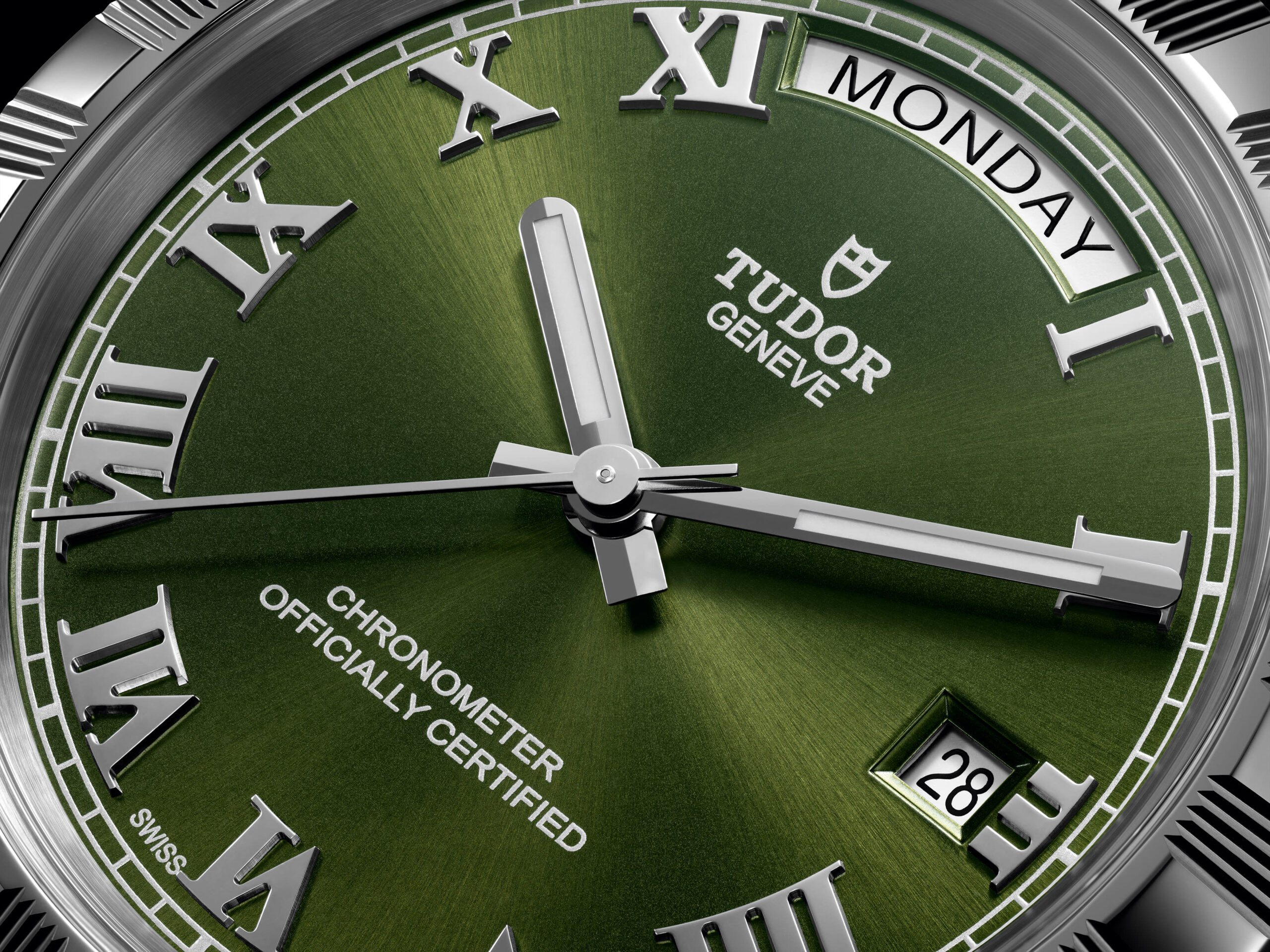
The 30 mm version is elegant and restrained, with no date to interrupt the dial. The 36 mm version adds a date at 3 o’clock, making it perhaps the most balanced daily option for many wrists. The 40 mm version carries both day and date, with the day displayed at 12 o’clock and the date at 3.
That larger model has a faint echo of authority about it. Day and date complications always do. They suggest planning, structure, a man or woman whose week is not left to chance.
There is something wonderfully civilised about such a display.
Time tells you the hour.
The calendar reminds you that life is escaping in larger pieces.
The Sport-Chic Bloodline
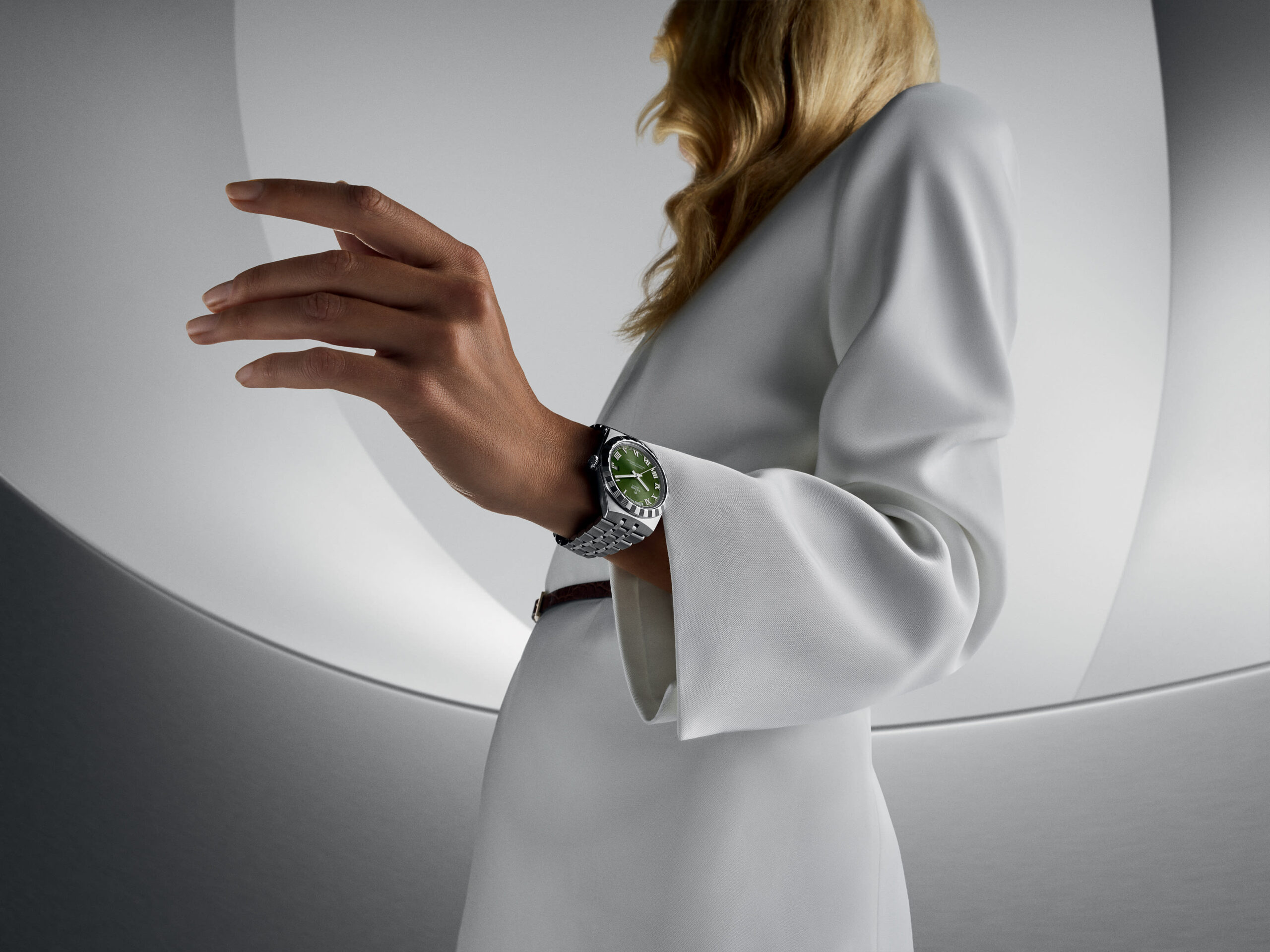
The Tudor Royal belongs to the sport-chic tradition: a watch that is dressier than a pure tool watch, stronger than a delicate dress watch, and more architectural than a simple round case on leather.
Its integrated five-link bracelet is central to that identity. This is not a bracelet added as an afterthought. It is part of the watch’s body. It flows from the case, creating a continuous line across the wrist.
That matters greatly.
Integrated-bracelet watches live or die by proportion. If the case is wrong, the bracelet cannot save it. If the bracelet is crude, the case becomes trapped. In the Tudor Royal, the look is sharp but not brutal, polished but not fragile. The watch seems designed for people who want refinement without becoming ornamental.
I have known many aristocrats who failed at that balance.
Steel, oddly enough, often succeeds where bloodlines do not.
1/1 Image courtesy of ©Tudor Watches - 2026
The Sharpened Bezel
One of the most important visual elements of the Royal is its notched bezel, redesigned for 2026 with a sharper, more polished cut.
This bezel gives the watch its face.
Without it, the Royal might become too calm, too smooth, perhaps even forgettable. With it, the case gains rhythm and tension. The notches catch light in small flashes, like the edge of a blade glimpsed beneath a velvet coat.
It is not aggressive.
But it is not soft either.
This is where Tudor’s design intelligence appears. The Royal must be elegant, but it cannot become sleepy. The bezel prevents that. It gives the watch a technical, almost architectural frame, making the dial feel protected and presented at the same time.
A good bezel is not merely decoration.
It is a boundary.
It tells the eye where the watch begins to speak.
Steel or Steel and Gold
The collection is offered in stainless steel and steel-and-gold configurations. This gives the Royal two different personalities.
The steel models feel modern, clean and versatile. They are the ones most likely to become daily companions — watches for work, weekends, dinners, airports and the small ceremonies of ordinary life.
The steel-and-gold versions bring a warmer, more traditional form of luxury. Yellow gold changes a watch’s behaviour immediately. It makes it more visible, more social, more ceremonial. On the Royal, however, the integrated bracelet and sharp case architecture keep the gold from becoming lazy.
It does not slump into decoration.
It remains structured.
This is important because two-tone watches are dangerous. When done poorly, they age badly. When done well, they carry a certain old-world confidence — the kind that does not apologise for pleasure.
And why should it?
Mortals spend too much of their short lives pretending not to enjoy beautiful things.
1/1 Image courtesy of ©Tudor Watches - 2026
A Kingdom of Dial Colours
The new Royal range brings a broad selection of dial colours: black, blue, silver, green, light blue, ivory, salmon, burgundy, brown, champagne and mother-of-pearl among them.
This is where the collection becomes interesting.
The Royal is not trying to win attention through one loud colour, as the Bumblebee does. Instead, Tudor gives the line many temperaments. A black dial makes it formal and disciplined. Blue gives it classic sport-chic ease. Silver feels architectural. Green brings contemporary confidence. Salmon gives vintage warmth. Burgundy gives drama. Mother-of-pearl adds softness and shifting light.
The dial choice will completely change the soul of the watch.
That is the cleverness of this collection. The case and bracelet form the palace. The dial decides who lives inside.
Personally, I find the warmer tones most intriguing. Salmon, brown and champagne give the Royal a slightly decadent air, like an old hotel bar where the wood is dark, the glasses are heavy, and everyone has at least one secret.
But the colder dials may be the better daily choice.
A vampire may appreciate drama.
A collector must still consider usefulness.
Manufacture Calibres Enter the Royal Line
Perhaps the most important update is not visible from across the room.
The 2026 Tudor Royal line now receives Tudor manufacture calibres. The 30 mm models use calibre MT5201 with approximately 50 hours of power reserve. The 36 mm models use calibre MT5412 with approximately 70 hours of power reserve. The 40 mm day-date models use calibre MT5633, also with approximately 70 hours of power reserve.
This matters because the Royal now becomes more than a handsome integrated-bracelet watch at an attractive level of luxury. It becomes mechanically more serious.
Tudor has spent years strengthening its movement identity, and bringing manufacture calibres into the Royal line gives the collection a stronger foundation. It tells us the model is not merely being refreshed cosmetically. It is being elevated.
That is the kind of change I respect.
A polished case can seduce the eye.
A better movement honours the owner after the first seduction has passed.
Practical Refinement
The Royal is waterproof to 100 metres and fitted with a screw-down crown and sapphire crystal. These are not details that dominate the poetry of the watch, but they are essential to its usefulness.
A sport-chic watch must live easily.
It should not be too delicate for rain, too formal for the weekend, or too casual for a proper dinner. The Royal’s strength is that it can occupy this middle territory without seeming lost.
The five-link integrated bracelet now includes Tudor’s T-fit clasp, allowing rapid adjustment. This is a practical improvement that can make a real difference on the wrist. Heat, travel, work, wine, salt, fatigue — the body changes through the day. A good bracelet should show mercy.
Luxury is not only what sparkles.
Luxury is what does not annoy you after twelve hours.
The Name “Royal”
Tudor first used the Royal name in the 1950s to suggest superior quality and refined design. That history gives the modern collection a pleasant old-world flavour, though the watch itself is very much modern.
The name is interesting because Tudor is not a royal brand in the same way some older houses present themselves. It has always carried a more practical spirit. Hans Wilsdorf created Tudor to offer watches with quality and dependability at a more accessible price than Rolex. Tudor has long been connected with robustness, tool watches, divers, military use and adventure.
So the word Royal, in Tudor’s world, cannot mean fragile aristocracy.
It must mean something else.
Perhaps reliable nobility.
A watch with manners, but also backbone.
That is exactly what this 2026 Royal appears to be.
The Vampirsky Verdict
The Tudor Royal 2026 is a quiet but meaningful update.
It will not shock the room like a yellow chronograph. It will not seduce the motorsport crowd like a carbon-cased limited edition. It will not pull the diver’s faithful away from the Black Bay. But it does something equally important: it strengthens Tudor’s elegant daily-watch offering with sharper design, wider choice and better mechanical substance.
The new sizes make the collection more inclusive.
The new dial colours give it personality.
The redesigned bezel and lugs give it greater definition.
The integrated five-link bracelet gives it fluidity.
The manufacture calibres give it credibility.
This is Tudor reminding us that not every daring act must be loud. Sometimes daring is the decision to refine what already exists until it becomes difficult to ignore.
After five centuries, I have learned that elegance is rarely accidental. It is usually the result of restraint, proportion and a certain refusal to panic. The Royal has that quality. It does not chase the eye with desperation. It waits for the eye to return.
And it will.
For there is a particular pleasure in a watch that can be worn almost anywhere, by almost anyone, without surrendering its identity. Such watches often become more important over time than the dramatic pieces that first steal attention.
The Tudor Royal 2026 is not a crown placed on the head.
It is a crown worn beneath the cuff.
And that, perhaps, is the more interesting kind of power.