









Introduction
Some watch brands are built around steel.
Some around movements.
Some around old names, inherited symbols, and stories polished so often that one can no longer tell where history ends and theatre begins.
anOrdain is built around a dial.
That may sound like a small thing, until one understands what kind of dial. Not painted, not stamped into false texture, not decorated to look handmade from a safe distance. anOrdain’s soul lives in enamel — vitreous, luminous, difficult, unpredictable enamel — made by hand in Glasgow through heat, patience and repetition.
It is a strange and beautiful thing, this craft.
Powder becomes surface. Fire becomes colour. Failure waits at every stage. A tiny bubble, a crack, a warped blank, one wrong firing, one careless pass of the hand, and the dial may be lost. There is no easy domination here. The maker must negotiate with material, not command it.
After five centuries, I have learned to respect such negotiations.
The finest things in this world are rarely obedient.
A Scottish Name, A Scottish Temperament
The name anOrdain comes from Loch an Ordain, a loch in the Scottish Highlands. This is appropriate, because the brand’s watches often feel as though they belong to landscape rather than fashion.
There is colour in them, yes — teal, pink, plum, blue, green, fumé gradients and porcelain white — but the colour is not shallow. It has the depth of water, mineral, weather and old light. The dials do not seem merely designed. They seem found.
That is not accidental.
anOrdain’s design language draws heavily from Scotland, from maps, land, materials and the quiet precision of craft. The Model 1 uses numerals inspired by old British Ordnance Survey maps, while its hands resemble traditional compass needles. That is a lovely idea, because it turns a watch into something related to navigation.
Not only navigation through geography.
Navigation through time.
A map tells you where you are.
A watch tells you what is leaving.
The Enamel Dial: Beauty with Teeth
Enamel is one of watchmaking’s oldest seductions, but it is not a gentle one.
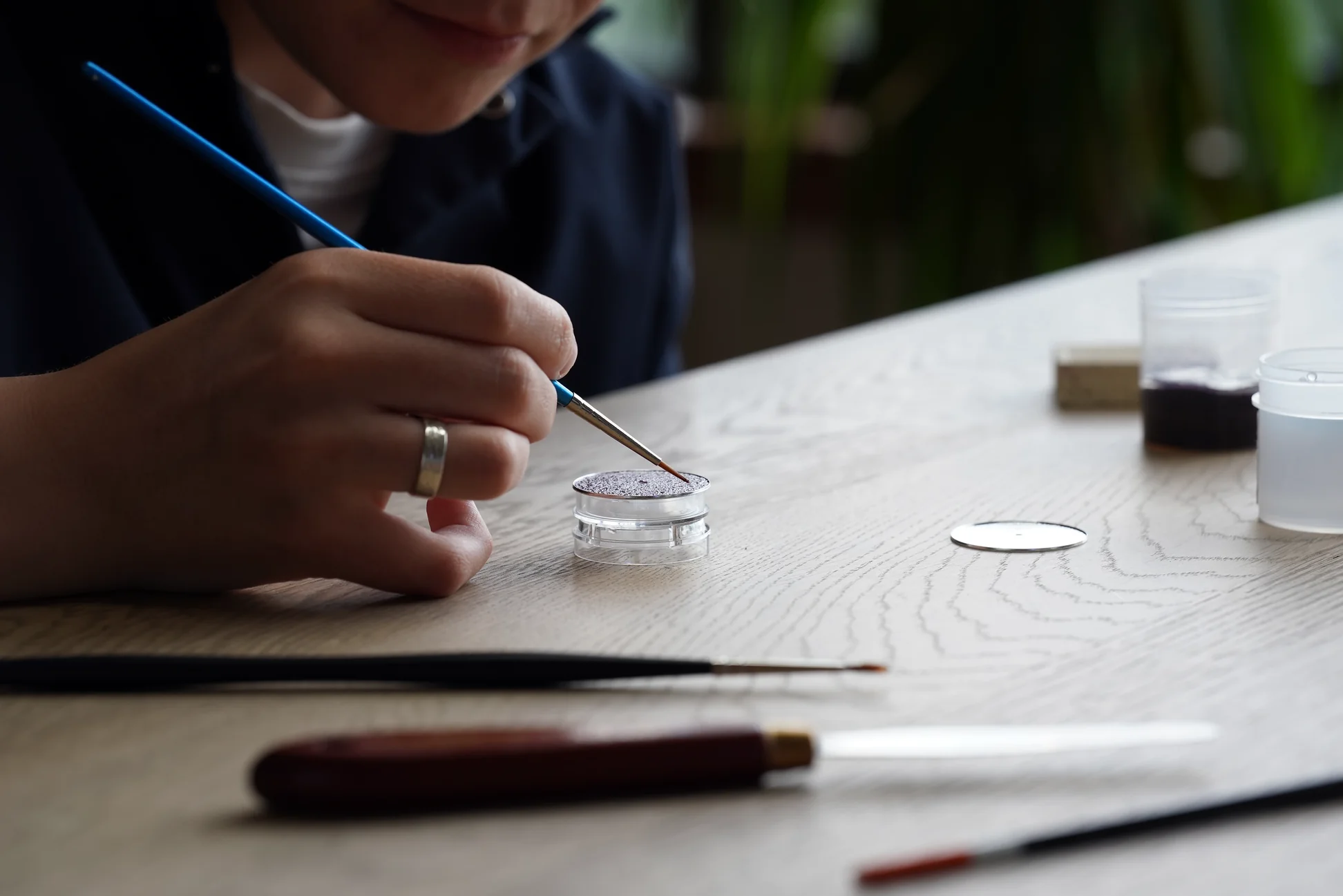
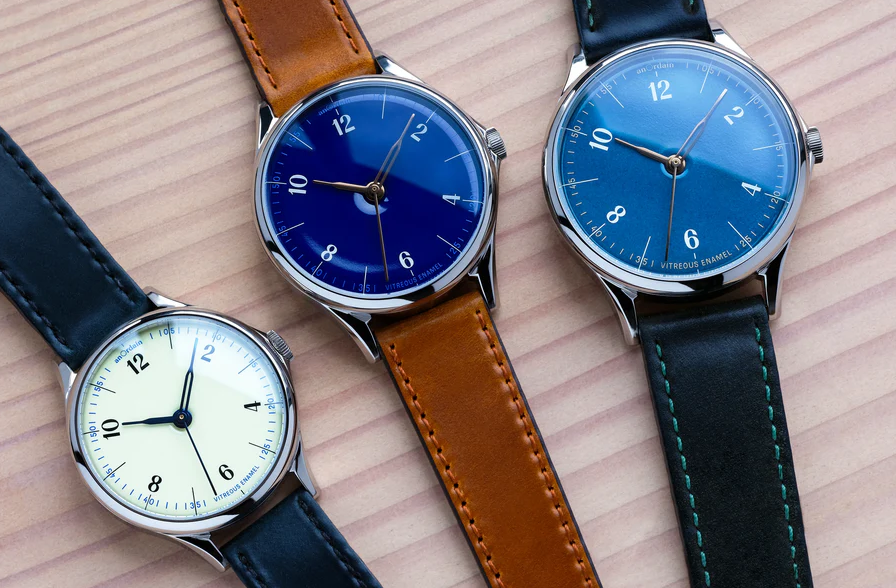
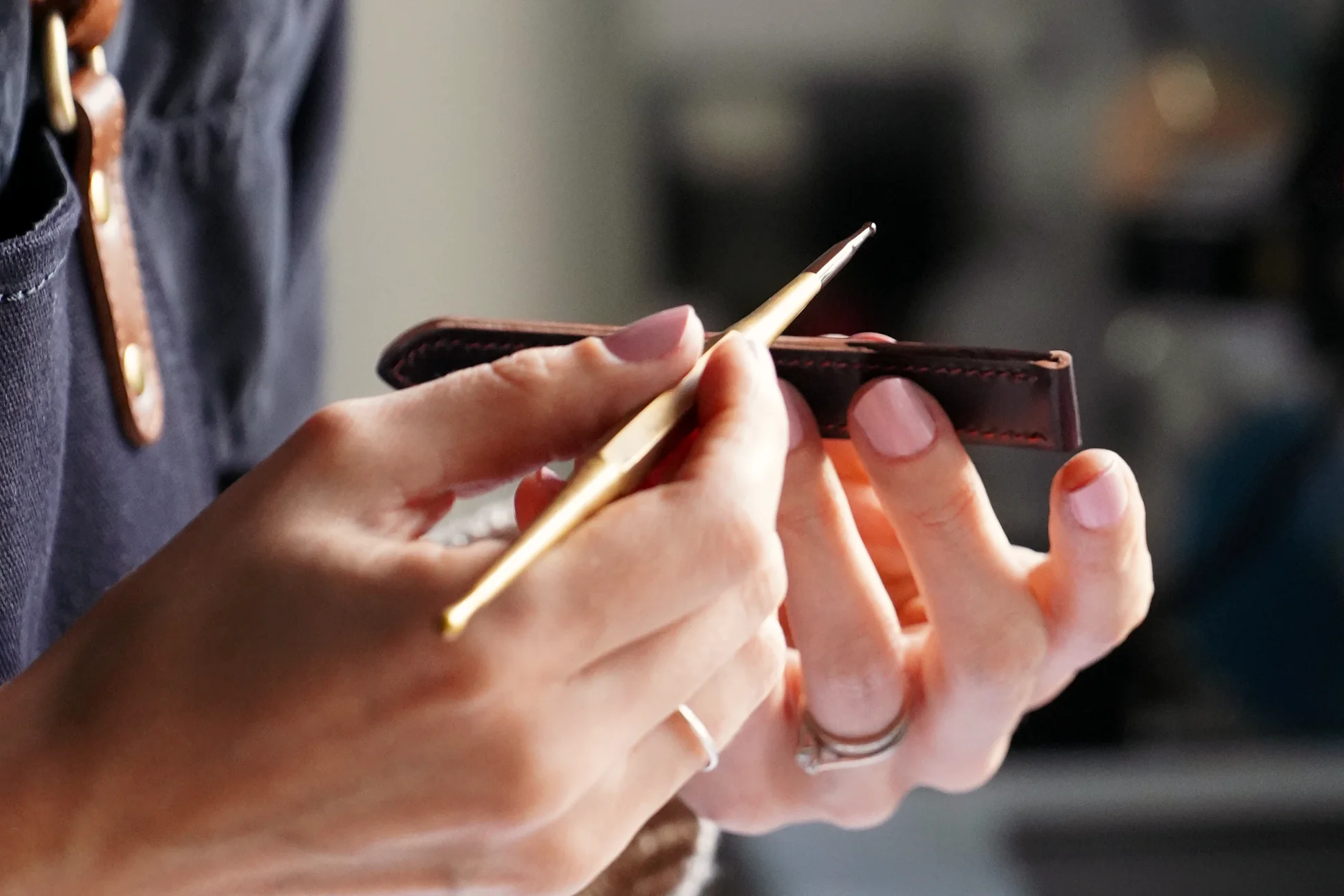
anOrdain describes its work as a repeated process of powdering enamel onto the dial, firing it, sanding it by hand, and repeating the method again until the colour gains depth and life. This is where the brand separates itself from the ordinary microbrand conversation.
Many young watch companies begin with a case, a logo, a reliable outsourced movement and a mood board. There is nothing wrong with that, if done honestly. But anOrdain begins with a craft that does not easily scale. It begins with a surface that must be made slowly, by skilled hands, under heat.
The dial is not merely a face.
It is the event.
A good enamel dial has a particular quality. Light enters it differently. Colour does not sit on top like paint. It seems to live beneath the surface, sealed under glass, as if the watch contains a small weather system of its own.
That is why collectors wait.
They are not only buying a colour.
They are buying depth.
Fumé: An Accident Turned into Language
One of anOrdain’s most recognisable achievements is its fumé enamel.
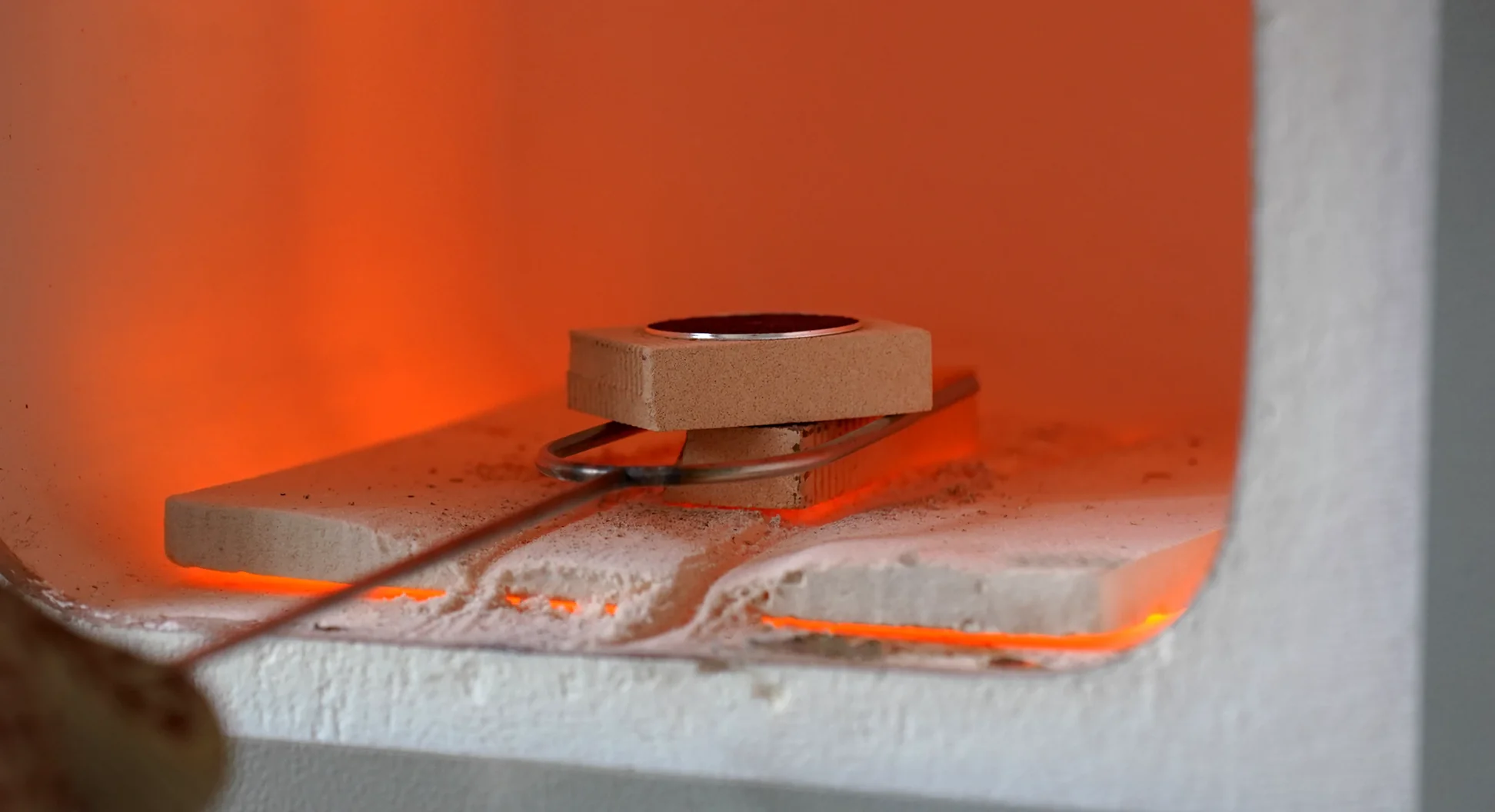
The brand’s own story of fumé enamel began with experimentation. Enamel, silver, heat and pressure did not behave perfectly. The material warped, domed and resisted. Normally, such behaviour would be considered failure. But in the hands of patient makers, failure sometimes becomes discovery.
After months of refinement, anOrdain turned this accident into one of its signature dial styles.
I adore this kind of origin.
Many discoveries begin as failures that refused to be discarded.
The fumé dial is beautiful because it carries this tension. The centre glows brighter, while the edges deepen and darken. It feels atmospheric, almost nocturnal, as though the colour is being pulled toward shadow. On the wrist, it gives the watch more drama than its simple case might suggest.
There is something very Vampirsky in that.
Light at the centre.
Darkness at the edge.
A little accident disciplined into art.
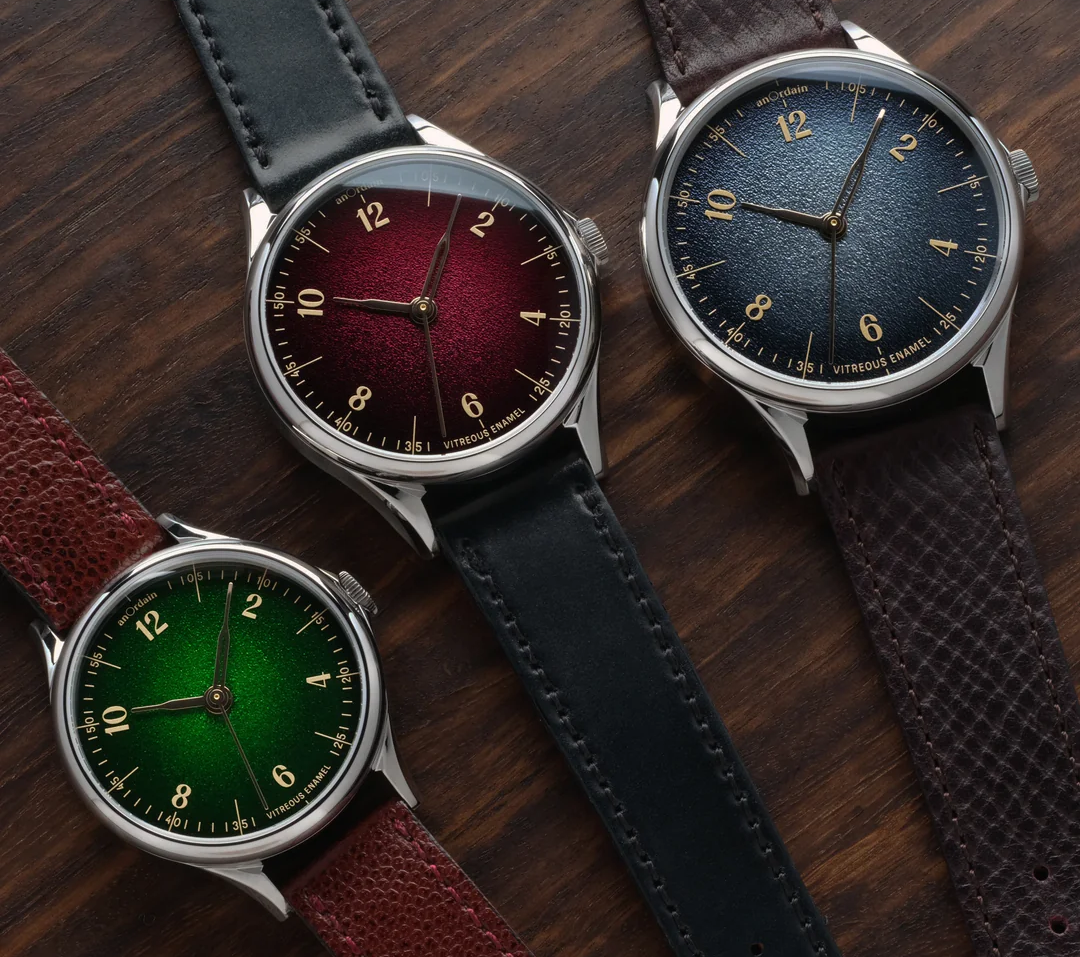
Model 1: The Beginning
The Model 1 is anOrdain’s beginning: simple, refined and contemporary. It is the purest expression of the brand’s early idea — a clean watch designed to showcase the enamel dial.
This restraint matters. When a dial is this rich, the rest of the watch must know when to step aside. The case, hands and numerals are there to frame the colour, not compete with it.
That is harder than it looks.
Many designers cannot resist adding one more flourish, one more polished surface, one more unnecessary complication. anOrdain’s best pieces understand that enamel already contains enough theatre. The watch does not need to shout over it.
A Model 1 in fumé enamel is especially compelling. It has the stillness of an old lake and the glow of a candle seen through coloured glass. It is not a watch one buys to impress a crowded room instantly. It is a watch for the owner’s eye first.
That is a nobler kind of luxury.
Model 2: The Field Watch Made Strange
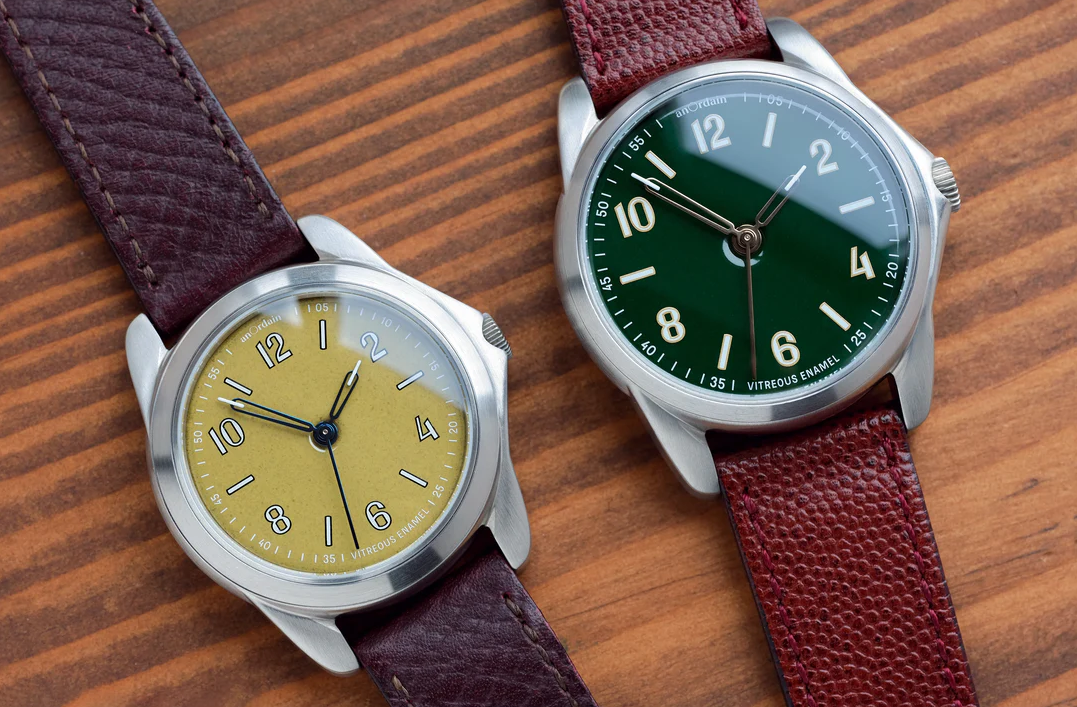
The Model 2 takes the enamel idea into a more robust field-watch form. anOrdain describes it as marrying its trademark enamel dials with a stronger stainless steel case, bringing high craft into the field-watch language.
This contrast is fascinating.
A field watch is usually practical, direct, modest and built for legibility. Enamel, by contrast, feels precious, old and slightly dangerous. Bringing the two together creates a watch with unusual tension: beauty prepared for use.
The Model 2 Porcelain pushes this idea further, using a true porcelain dial with vitreous glaze and hand-painted Super-LumiNova numerals and hands. Porcelain has its own character — calmer, chalkier, more architectural than enamel. Where enamel can glow like deep liquid, porcelain carries the quiet dignity of fired earth.
A porcelain field watch is a strange idea.
That is precisely why it interests me.
Model 3: Experiment as Identity
The Model 3 is home to anOrdain’s more experimental work. It shows that the brand is not content merely to repeat its early success.
This matters greatly.
A young brand can become trapped by its own first miracle. Collectors ask for the thing they already love. Waiting lists grow. Production slows. The temptation is to protect the formula and never disturb it.
But craft must keep moving, or it becomes demonstration.
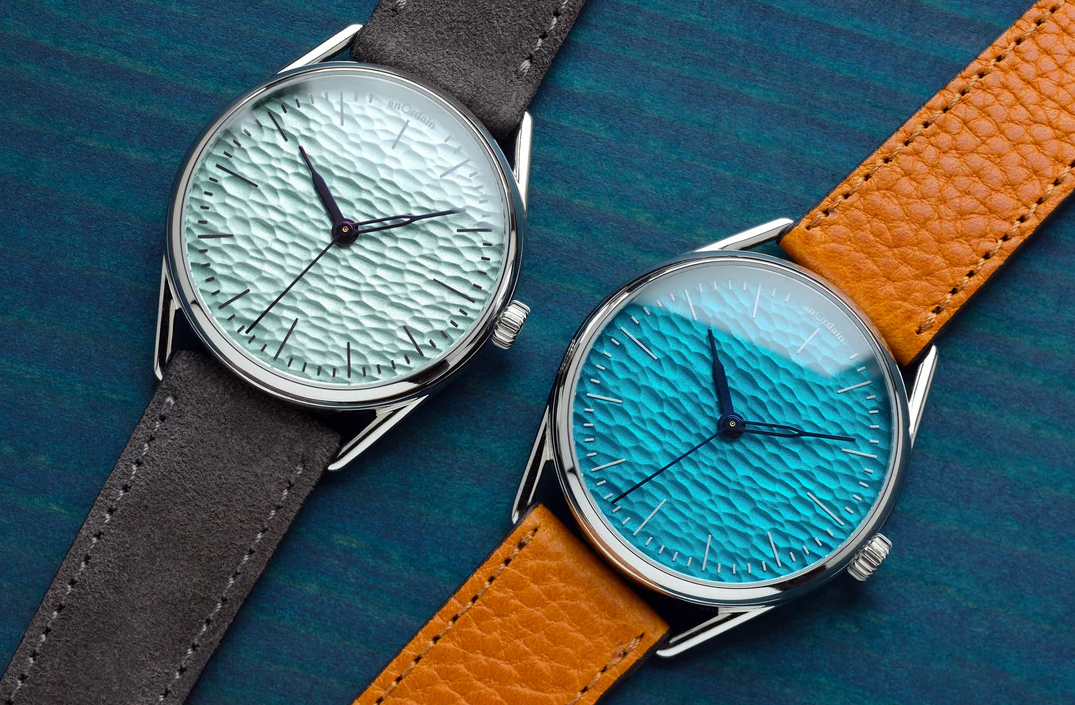
The Model 3 suggests that anOrdain wants enamel not only as a signature, but as a territory to explore. Texture, depth, experiment, difficulty — these are dangerous companions, but they are also where meaningful work lives.
One does not master fire by staying comfortable.
The Waiting List: Desire Measured in Years
anOrdain’s enamel watches are made through a build-slot system because demand exceeds what the workshop can produce quickly. The brand states that its enamel watches require time and skill, and its waiting list exists to manage demand fairly.
This is both practical and poetic.
In the modern watch world, waiting lists often smell of manipulation. Scarcity becomes theatre. Desire becomes a queue. But with anOrdain, the waiting feels connected to the actual nature of the work. Enamel cannot simply be accelerated without consequence. A small workshop cannot become an industrial monster overnight without risking the very thing people came for.
So the buyer waits.
And perhaps that is not entirely bad.
A watch made through patience should be acquired with some patience too.
Mortals, of course, dislike waiting. They believe desire becomes more honest when satisfied immediately. They are wrong. Desire often becomes clearer when it must survive time.
Glasgow, Not Geneva
One of the most attractive things about anOrdain is that it belongs unmistakably to Glasgow.
This is not a Swiss brand wearing another accent. It is part of the modern British and Scottish watchmaking revival, where small companies are discovering that they do not need to imitate Switzerland to matter. They can bring their own geography, typography, craft culture and design sensibility into the conversation.
That is healthy for watchmaking.
The great Swiss houses will remain. They are too old, too skilled and too powerful not to. But the watch world becomes far more interesting when other voices speak clearly. Glasgow enamel, British map numerals, Scottish landscape colour, small-batch production — these are not substitutes for Swiss tradition.
They are alternatives.
And alternatives are where life begins.
The Vampirsky View
What I admire about anOrdain is its refusal to reduce beauty to decoration.
The dial is not an applied flourish. It is the centre of the brand’s moral argument. It says that colour can be deep, that patience has value, that accident can become technique, and that a small workshop in Glasgow can make something collectors around the world will wait years to own.
That is not merely good branding.
That is craft with consequence.
Many watches today are designed to look perfect in photographs. anOrdain watches seem designed to change in the hand, to reward the angle of light, to ask the wearer to look again. This is important, because a watch is not a static image. It lives on the wrist. It moves through rooms, weather, seasons and moods.
An enamel dial understands this.
It does not reveal itself all at once.
Neither do the best people.
Final Thoughts
anOrdain is not for everyone, and that is part of its strength.
Those who want instant recognition may look elsewhere. Those who measure value only by logo weight may not understand the appeal. Those who believe a watch must shout to be important will likely miss the point entirely.
But for the collector who loves craft, colour, patience and the human struggle hidden inside a beautiful surface, anOrdain offers something rare.
A watch not built around conquest, but attention.
Not around status, but making.
Not around noise, but depth.
After five centuries, I have seen men chase immortality through gold, bloodlines, monuments and machines. Most fail. But sometimes a small object survives because someone cared enough to make it slowly, beautifully and with the full knowledge that the material might betray them at any moment.
That is courage.
anOrdain takes powdered glass, metal, fire and time, and persuades them into colour.
There are worse ways to seek eternity.
Source: anOrdain official website.